I used to identify with Jonah’s story. Maybe you have too.
I saw Jonah as the guy who ran from God, got a second chance, and finally did what he was supposed to do. I saw him as a reluctant prophet who eventually came around. A cautionary tale, sure … but also a story of redemption.
I was wrong.
Or, at least, I was only seeing half the story.
Because Jonah didn’t repent. He didn’t soften or surrender.
Not because Jonah’s heart had changed. Jonah obeyed without ever becoming humble. But God would accomplish His will despite and through Jonah’s reluctant obedience.
Jonah’s Story Ends Unresolved Because Jonah’s Humility Is Unresolved
The book ends with Jonah angry at God’s mercy, sulking under a plant, insisting:
Jonah is not the hero of his story. He is a warning.
Jesus Is the True Jonah
Then some of the Pharisees and teachers of the law said to him, “Teacher, we want to see a sign from you.”He answered, “A wicked and adulterous generation asks for a sign! But none will be given it except the sign of the prophet Jonah. For as Jonah was three days and three nights in the belly of a huge fish, so the Son of Man will be three days and three nights in the heart of the earth. The men of Nineveh will stand up at the judgment with this generation and condemn it; for they repented at the preaching of Jonah, and now something greater than Jonah is here. (Matthew 12:38-41)
When the Pharisees demanded a sign, Jesus called them “wicked.” Not because they were immoral, but because they were proud. Pride is the true wickedness because it refuses to surrender. It demands proof. Pride wants God to validate instead of transform.
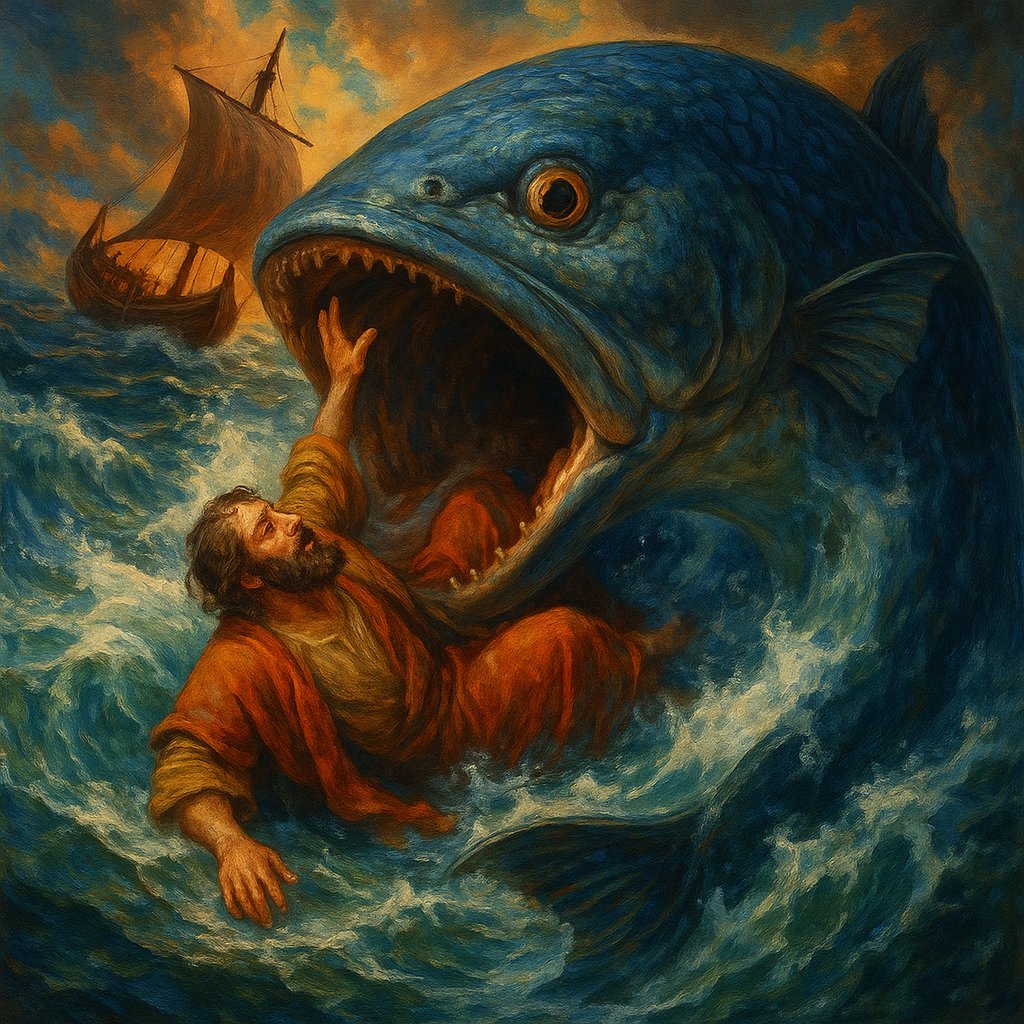
Jesus said the only sign they would receive was “the sign of Jonah.” Most people think this refers only to the three days in the fish and the three days in the grave. But Jesus goes deeper. He points to the hearts involved.
The men of Nineveh humbled themselves by repenting, but the Pharisees refused.
Jesus is basically telling them:
“You are Jonah. You want a sign because you refuse to surrender to God.”
He confronts them with their Jonah‑likeness. Outward obedience. Inward resistance. Religious performance without repentance. And then He reenacts Jonah’s story … and completes it.
Where Jonah fled, Jesus obeyed. Jonah resisted. Jesus surrendered. Jonah sulked. Jesus trusted. Jonah wanted judgment, but Jesus offered forgiveness. Jonah survived the fish. Jesus defeated the dragon.
Jesus entered the belly of the beast willingly — the grave, the chaos, and the darkness — trusting the Father to defeat evil from the inside.
He humbled Himself… even to death… therefore God exalted Him.
Why This Hit Me So Hard
I always identified with Jonah … for the wrong reasons.
I saw the second chance. The rescue. The reluctant obedience.
But I didn’t see the pride. The resentment. The refusal to surrender.
And then I realized something startling:
I have obeyed God without surrendering to Him. I have done the right thing with the wrong heart. I have resented mercy when it wasn’t for me.
But the very fact that these thoughts are detestable to me is evidence that the Spirit is doing His work. He is rooting out pride. Forming humility. Teaching me to rejoice with those who rejoice and weep with those who weep (Romans 12:15).
He is making me unlike Jonah. He is making me like Jesus.
The Real Message of Jonah
The book of Jonah is not about second chances. Or reluctant obedience. It’s not about running from God.
It’s about the danger of obedience without humility. The tragedy of a heart that refuses to surrender. The God who is more merciful than we want Him to be. And, ultimately, it’s about the One who fulfilled the sign of Jonah — the One who descended, trusted, surrendered, died, and rose again.
Jonah shows us what pride looks like. Jesus displays humility.
Jonah shows us the danger of a hardened heart. Jesus shows us the beauty of a surrendered one.
Jonah shows us ourselves. Jesus saves us from ourselves.
Jonah survived the fish. Jesus defeated the dragon. Only one of them offers us the pathway to eternal life and true love.
Wow! So many fantastic points in this post. I recall having similar thoughts when my annual study went through Jonah recently, and I mentioned some to hubby when it got to the part about the drying plant. God really tried to get Jonah to change his heart to see things with a humble spirit and look through The Creator’s eyes.



Leave a Reply