
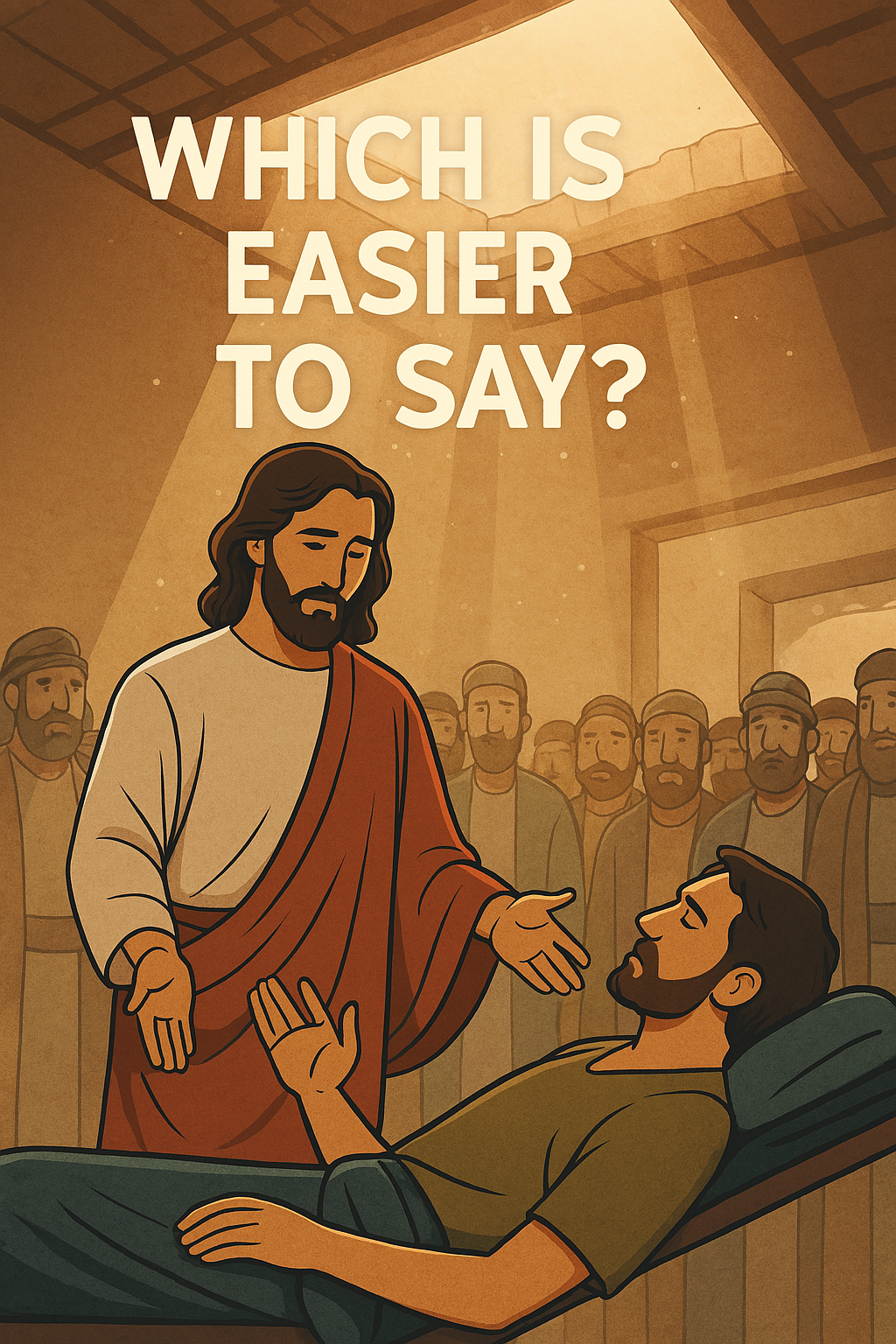

In the Gospel story of the paralytic man lowered through the roof by his friends, Jesus asks a piercing question:
“Which is easier to say, ‘Your sins are forgiven,’ or ‘Get up and walk’?” (Matthew 9:5, NIV)
On the surface, the answer seems obvious. Anyone could say, “Your sins are forgiven,” because there’s no visible proof required. But when Jesus told the man to get up and walk—and he did—the crowd could see with their own eyes that something miraculous had happened. The physical healing was undeniable. Yet Jesus made it clear that the invisible healing—the forgiveness of sins—was just as real. In fact, it was even more important.
Forgiveness is easier said than done
Jesus’ question has been echoing in my mind as I think about a very public moment of “forgiveness” that made headlines recently. After the tragic death of Charlie Kirk, his wife publicly declared forgiveness for the man responsible. Some praised her words as a powerful witness. Others questioned whether it was genuine or simply a performance for the cameras.
The truth is, we can’t know. Forgiveness is not something we can measure or verify from the outside. It’s not our business to judge whether Erica Kirk’s words were heartfelt or not—that’s between her and God. What we can say is that forgiveness, when it is real, is often invisible. It doesn’t always come with a dramatic outward sign. It doesn’t always look like reconciliation or healing in ways the world can see.
The forgiveness we can’t see
Yet, forgiveness is no less powerful for being unseen. Just as Jesus showed that spiritual healing is as real as physical healing, we are reminded that the quiet, hidden work of grace in the heart is every bit as miraculous as a body made whole.
We live in a culture that prizes what can be displayed, posted, or proven. But the kingdom of God often works in ways that are hidden from view. Forgiveness, mercy, and spiritual renewal may not trend on social media, but they are the deeper miracles. The ones that last.
That’s something worth remembering: the unseen work of God is no less real than the visible. In fact, it may be the greater miracle.
Key Takeaway
The story of Jesus healing the paralytic reminds us that the unseen work of forgiveness is every bit as real—and even greater—than visible miracles. While physical healing can be witnessed, the quiet transformation of the heart through grace is the deeper miracle that lasts.
FAQs
Q: What does Jesus mean by “Which is easier to say?” A: With this question, Jesus highlights the difference between visible and invisible miracles. Physical healing can be seen, but forgiveness—though unseen—is just as real and even more significant.
Q: Why is forgiveness considered a greater miracle than healing? A: Healing restores the body temporarily, but forgiveness restores the soul eternally. It reconciles us with God and brings lasting spiritual renewal.
Q: How does this story apply to our lives today? A: We live in a culture that values what can be proven or displayed. This passage reminds us that God often works in hidden ways—through forgiveness, mercy, and grace—that may not be visible but are profoundly transformative.
Q: Can forgiveness be genuine if it doesn’t look dramatic? A: Yes. True forgiveness is often quiet and unseen. It doesn’t always involve reconciliation or public gestures, but it is still a powerful work of God’s grace in the heart.