
Romantic suspense thrives on tension, misdirection, and mystery—but beneath the chaos and uncertainty, there’s often a heartbeat of redemption. Especially in Christian fiction. That’s exactly what pulses through my novel Fireman’s Lesson in Love. All things work together. It’s no accident. The entire plot is quietly but powerfully built on Romans 8:28 (NIV):
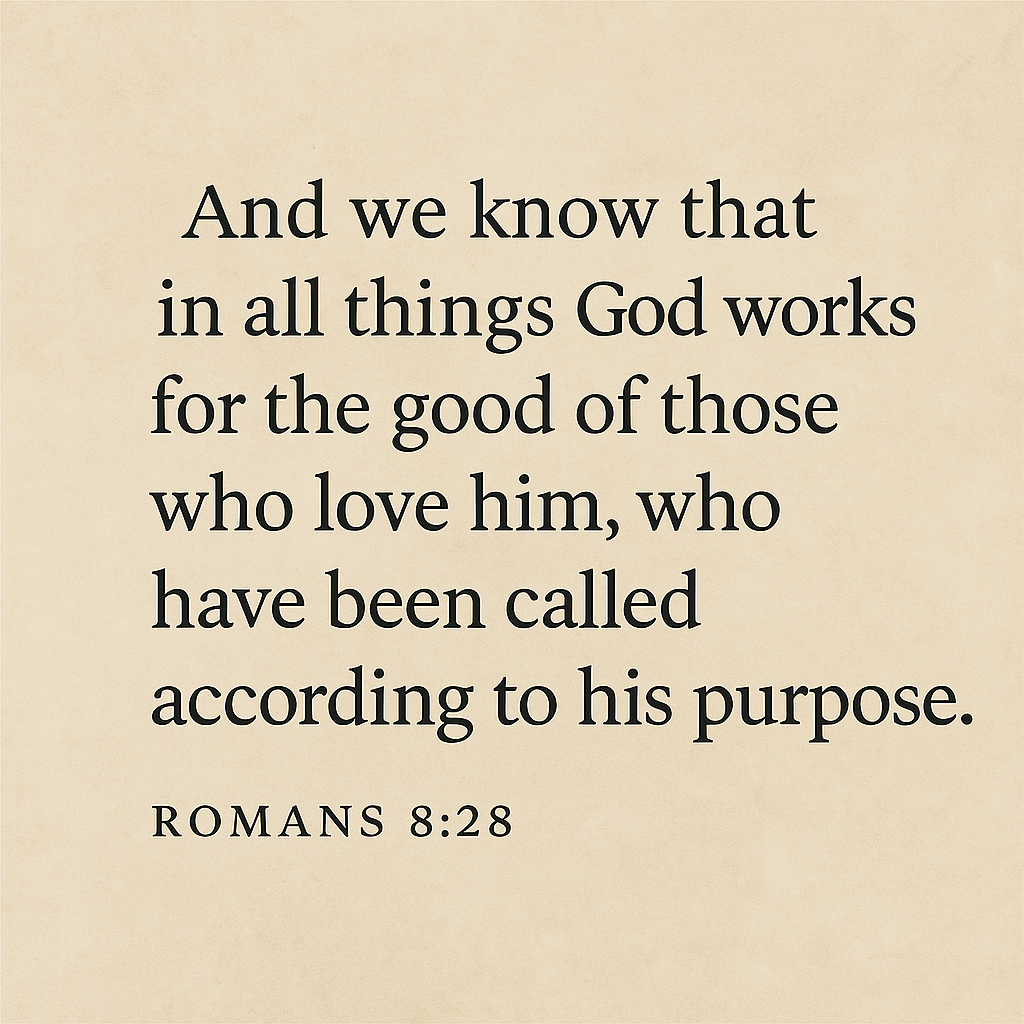
“And we know that in all things God works for the good of those who love him, who have been called according to his purpose.”
This verse isn’t just a comforting truth—it’s a blueprint for storytelling.

(Image created using Microsoft Copilot)
Suspense Meets Sovereignty
In Fireman’s Lesson in Love, danger and mystery force two broken souls to face not only the flames around them, but the ones within. Grief. Regret. Pasts that refuse to stay buried. And yet, even when nothing makes sense, even when the road winds through past trauma and present confusion, the theme remains:
God is still at work writing the story.
The main characters, Max and Audrey, both wrestle with the “all things” part of the verse. God works not just in the good events, but the painful, the confusing, and the nearly tragic. That’s where the spiritual truth shines through the suspense—what feels like danger becomes divine detour. A time of testing. An opportunity for growth.
Romans 8:28 as a Narrative Framework
Whether I’m writing suspense, romance, or even devotionals, I’ve found Romans 8:28 offers a powerful structure for Christian storytelling.
The Setup: Introduce brokenness, mystery, or challenge
Every compelling faith-driven story starts with something fractured—a life interrupted, a truth questioned, a quiet ache that won’t go away. The setup is not just an introduction. It’s an invitation into mystery. It gives your readers a glimpse of the unresolved before the healing begins.
Here’s how it works:
- Start with a wound: Loss, betrayal, fear, or even physical danger—each taps into raw humanity. In Fireman’s Lesson in Love, both characters carry internal scars, and one of them ends up with external scars by the end of the novel. Their brokenness and fragility make them relatable and prime them for transformation.
- Establish the unknown: Give your protagonist a challenge they can’t immediately solve. Maybe it’s a firestorm—literal or emotional—that pushes them beyond their comfort zone. This uncertainty mirrors real-life spiritual questioning.
- Layer the suspense: Is misdirection involved? Unspoken grief? A secret past? When readers sense there’s more than meets the eye, they will lean in and try to chase down the truth.
- Quietly foreshadow grace: Even in the midst of trouble, you can sneak in divine fingerprints—a subtle Scripture reference, a moment of unexpected kindness, a dream that won’t die. These hints whisper that brokenness isn’t the end of the story.
The Conflict: Allow doubt, loss, or tension to stir
Conflict isn’t just where characters clash—it’s where truth trembles. It’s the heartbeat of suspense and the moment when your characters, and your readers, feel most human.
Here’s how to deepen this story element with purpose and emotional weight:
- Expose the fault lines: Let fear surface. Let grief breathe. Let tension crack what appeared stable. In the raw unraveling, characters become real and redemption becomes necessary.
- Introduce spiritual doubt: Has God really called me? Why would He allow this? Romans 8:28 hangs like a thread—still true, but hard to believe. Let your protagonist wrestle with it, echoing Gideon, Job, Jeremiah, or Peter.
- Complicate relationships: Emotional tension flourishes when loyalties are tested. Love might bloom, but distrust or miscommunication can fuel the fire. The characters don’t just face external threats. They have to do deal with internal unrest, as well.
- Layer in loss or fear: Maybe it’s literal loss—a job, a loved one, a dream. Or maybe it’s the fear of failure, rejection, or vulnerability. Conflict thrives when characters face what they’ve most hoped to avoid.
- Withhold resolution: Resist the urge to fix things too soon. Let the reader feel the tension. Let the characters sit in it. The longer the conflict breathes, the sweeter the redemption is when it shows up.
In Fireman’s Lesson in Love, conflict shows up in property destruction, lost loves returning, whispered lies, and shouted truths—and each element nudges the characters past their breaking points into their breakthroughs.
The Turn: Unveil glimpses of redemption—hidden hands of grace
The Turn is the hinge of your story’s emotional arc. It’s subtle at first—like dawn cracking open a bruised sky. Redemption doesn’t rush in. It tiptoes. This is where the “hidden hands of grace” begin to show themselves.
Here’s how to let that grace unfold:
- Introduce quiet mercy: Not a full rescue—just a moment. A gesture. A smile. A memory. It might be a stranger’s kindness or a long-forgotten prayer resurfacing with power. Grace often arrives unannounced.
- Spiritual echoes: Verses or truths once doubted begin to shimmer again. Romans 8:28 lingers, not as platitude but as a whisper: What if this pain is part of the promise? Let characters begin to wrestle their way back to belief.
- Symbolic shifts: Rain after fire. A caged bird suddenly free to fly. A letter that arrives too late to change the past but just in time to soften it. These metaphors—delicate and deliberate—carry the essence of redemptive storytelling.
- Subvert despair: What felt like a loss begins to feel like a lesson. The thing your character feared becomes the gateway to strength. Not every wound heals completely, but characters can learn to walk differently with the pain.
- Slow revelations: Maybe the love interest reveals a scar that changes everything. Or the antagonist makes a noble sacrifice. Let the curtain part slowly—the reader should see grace peeping through before even the characters fully realize it.
In Fireman’s Lesson in Love, this takes the form of Audrey quite literally reading Romans 8:28 in the Bible and wrestling with what it means in her life. She sees that her past isn’t a liability—it’s her source of empathy. But she comes to see this gradually, not all at once. And while Max questions the truth of Romans 8:28 at the scene of a fire, everything that unravels afterwards clearly chisels the truth in his heart.
The Resolution: Not necessarily “happily ever after,” but purpose revealed and healing offered
In every narrative arc, readers crave resolution. Romans 8:28 promises it, just not always in the way we expect. The end of your story isn’t about tying a perfect bow—it’s about affirming that every strand of the story, no matter how frayed, was being woven all along into a work of art.
Here’s how to nurture a resolution that breathes purpose into faith-filled fiction:
- Embrace imperfection: Not every character ends up with what they wanted—but they gain what they needed. Maybe there’s still grief, but now it’s softened by peace. Maybe the healing isn’t complete, but it’s begun. This echoes the biblical truth that our stories aren’t spotless, they’re redeemed.
- Confirm spiritual transformation: Let us see how the character has shifted—not just in action, but in soul. Have they surrendered fear? Trusted God’s timing? Forgiven the unforgivable? Show us how Romans 8:28 played out—not through convenience, but through calling.
- Keep echoes of tension: Suspense doesn’t evaporate—it evolves. Perhaps there’s still uncertainty ahead, but now the protagonist stands in courage, not chaos. As in real life, spiritual resolution coexists with complexity.
- Ground it in good: This is where “good” takes center stage—not glittery happiness, but anchored grace. Show purpose birthed from pain. Show relationships refined, not just repaired. Show how the struggle led to strength.
- Leave room for reflection: The best endings hold up a mirror through which the readers can see themselves and feel empowered to consider their own narrative arc. What has God been weaving in them?
In Fireman’s Lesson in Love, the flames of trouble don’t magically disappear—but the characters start to see them differently. What once threatened to consume them now refines. Their resolution isn’t a finish line. It’s a holy beginning. And it’s an invitation for readers to explore how the themes of forgiveness, grace, and second chances are at play in their own lives.
Why This Verse Belongs in Every Christian Story
Every character, just like every person, faces moments that feel like plot twists gone wrong. But if we dare to trace the hand of God through those twists, we find that even the tension serves His truth.
Whether in suspense, women’s fiction, historical drama, or romantic comedy—using Romans 8:28 as a framework can bring refreshing heart and soul into your story. The redemption this verse promises is the lifeblood of Christian fiction. A redemption that’s not only possible, but also already in the works.
As my characters in Fireman’s Lesson in Love chase answers, confront danger, and slowly uncover what’s in their own hearts, Romans 8:28 quietly narrates behind every scene. The lesson isn’t just how to survive the blazes. It’s how to trust that even the fire can refine.