
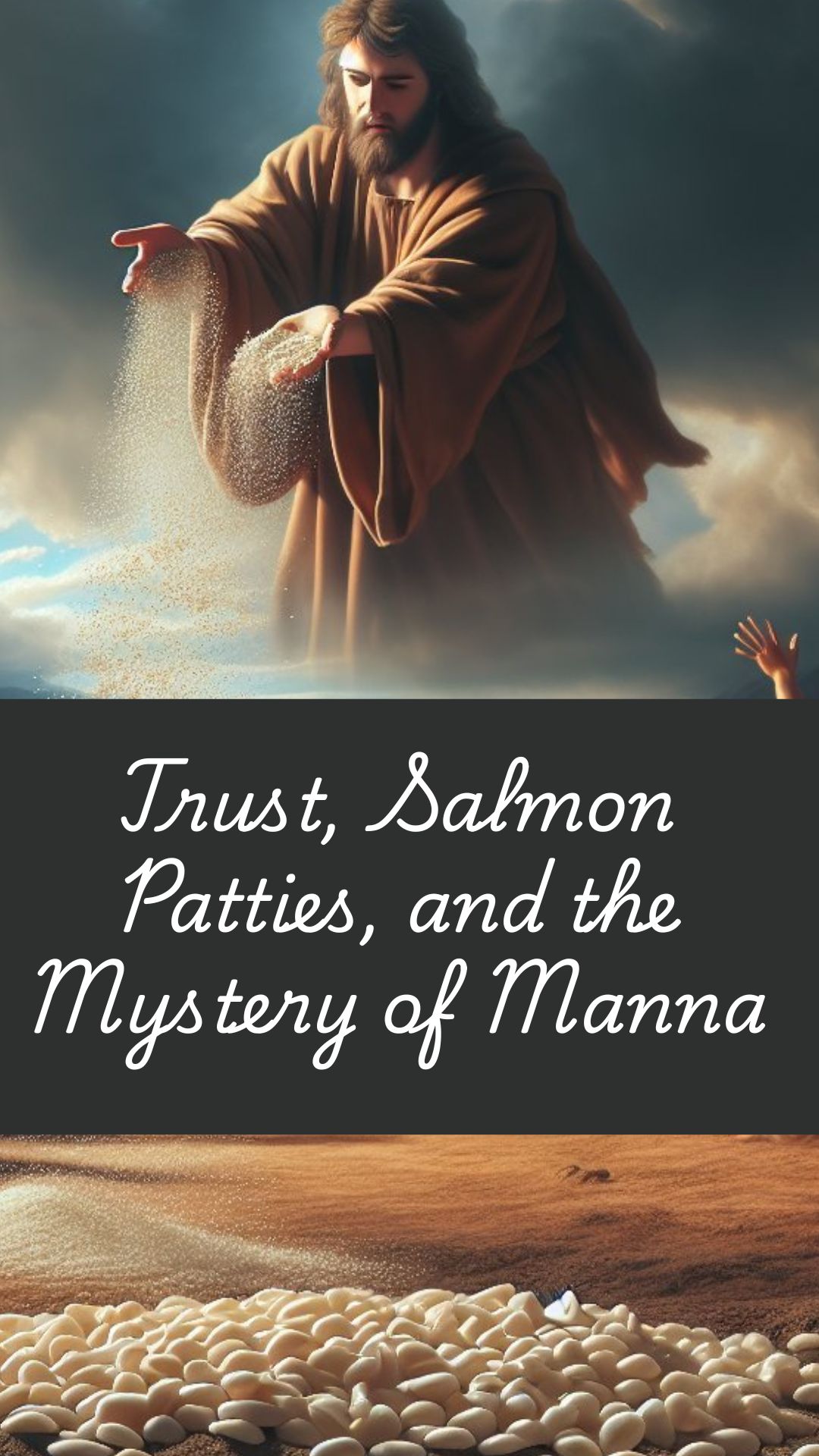

Last night I made salmon patties for dinner. Nothing fancy — just a simple, tasty meal. But when I set the plate on the table, both my girls paused. They leaned in, suspicious and curious, and asked the same question Israel once asked in the wilderness when they first saw manna from heaven:
“What is it?”
Exodus 16:15, NIV
I explained: “They’re like meatballs, just made from salmon instead of ground beef. And they’re smushed down flattish instead of round.” That tiny bit of clarity helped. The girls were more willing to try them because they trusted me. At least they agreed to take a bite.

And as I watched them, I thought about manna.
When God fed Israel in the wilderness, He didn’t explain the manna. He didn’t give them a recipe, a nutritional breakdown, or a comforting analogy. He simply provided it and told them how to gather it, how to eat it, and how not to hoard it.
They named it manna because the word literally means: “What is it?” The same question my girls asked at the dinner table.
But, unlike my girls, Israel didn’t get a full explanation. They got instructions. Provision. A daily opportunity to trust.
Trust often begins where explanations end
My girls wanted understanding before obedience. Honestly, so do I. I want God to explain Himself. Tell me why something looks strange or unfamiliar. Reassure me that what He’s handing me is safe, good, and purposeful.
But trust rarely works that way.
Israel had to learn to trust God without knowing what manna was. I have to learn to trust God without knowing what tomorrow looks like. I wanted my girls to trust that I know what I’m doing in the kitchen. God wants me to trust that He knows what He’s doing in my life.
Trust is relational, not informational
My girls didn’t trust the salmon patties because they fully understood them. They trusted because they know me.
Israel didn’t need to understand manna. They needed to understand God.
And maybe that’s the quiet invitation woven through both stories. Trust isn’t built on explanations. It’s built on relationship.
Trust is also humility
Trust requires letting go of control, letting go of the need to manage outcomes, and letting go of the demand for certainty. It’s admitting that someone else knows more than we do — and that this is good news, not a threat.
Israel struggled with that. I struggle with that. My girls struggle with that. Because we’re all human.
But God keeps giving us opportunities to practice trust in small, ordinary ways — at dinner tables, during conversations, through unexpected circumstances, and in unfamiliar “manna” moments.
The daily practice of “What is it?”
Every day, God hands us something we don’t fully understand: A challenge. A blessing. A delay. A change. A responsibility. A relationship. A calling.
And we ask, “What is it?” Not because we’re faithless, but because we’re human.
God doesn’t always explain. But He always provides. And He always invites us to trust Him enough to take the next bite, the next step, and the next day.
FAQs: Trust, Manna, and Everyday Faith
How is manna similar to the things God gives us today?
God still gives us “manna moments”: circumstances, opportunities, responsibilities, or challenges we don’t fully understand. They arrive without explanation but with purpose, inviting us to trust Him one day at a time.
What can parents learn about trust from this story?
Parenting mirrors God’s heart. We guide our children through things they don’t yet understand, just as God guides us. Their willingness to trust us becomes a picture of our willingness to trust Him.
How do I practice trust when I don’t understand what God is doing?
Trust grows through relationship, not explanation. We practice trust by remembering God’s character, obeying the next step He’s made clear, and receiving today’s “manna” without demanding tomorrow’s answers.
Is it okay to ask God “What is it?” when life feels confusing?
Absolutely. God wasn’t offended when the Israelites asked the question. He isn’t threatened by our confusion. He meets us in it. Asking “What is it?” becomes an invitation to deeper trust rather than a sign of weak faith.
What do salmon patties have to do with trust?
This dinner table moment shows how trust often begins with small, ordinary choices. My girls didn’t need full understanding. They needed confidence in me. That mirrors how we learn to trust God in everyday uncertainties.
Why didn’t God explain manna to the Israelites?
Scripture shows that God gave instructions, not explanations. This invited Israel to trust His character rather than rely on their own understanding. It was a daily practice of transformation, not daily lessons full of information.
What’s the main takeaway from this post?
Trust isn’t built on explanations. It’s built on relationship. Whether through salmon patties or manna, God invites us to trust Him even when we don’t fully understand what He’s handing us.
Leave a Reply