
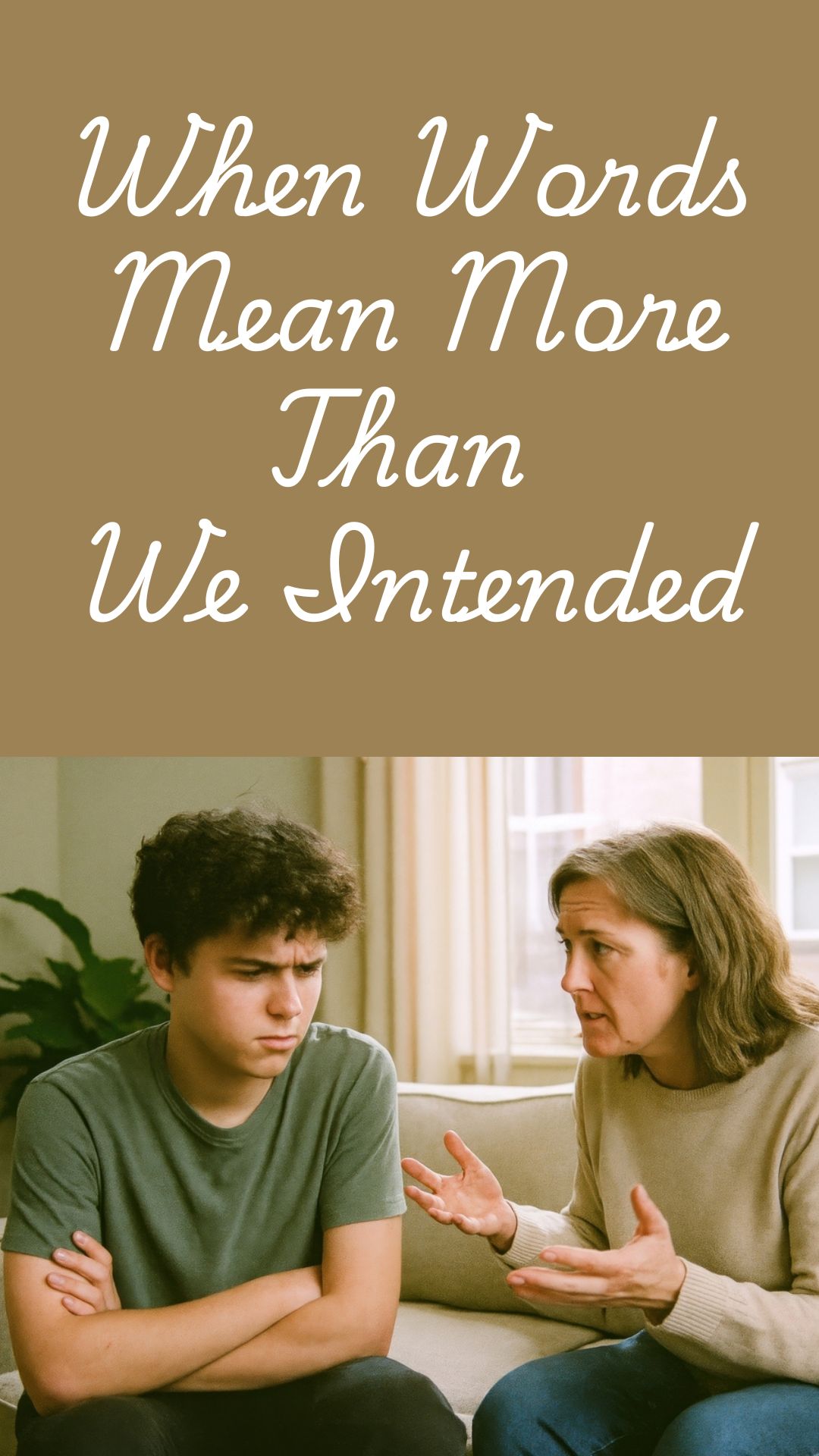

Some mornings begin with quiet reflection, but others begin with conversations that stay with you long after the day gets moving. My daughter and I found ourselves talking about the power of words — how they can land softly or sharply, how they can heal or harm, and how often the impact has less to do with what we meant and more to do with how someone heard what we said.
We don’t speak into a vacuum. We speak into someone’s history, perceptions, and misconceptions. And sometimes even the truest words carry unintended weight.
A Family Story That Still Echoes
Years ago, my mother‑in‑law said, in front of my husband, that marrying his father was the biggest mistake she ever made. Given the history, I understand why she felt that way. Their marriage was marked by abandonment, silence, and infidelity. My husband remembers his father disappearing for long stretches–sometimes to sing with a Southern Gospel quartet, sometimes to live with another woman entirely. He and his brother didn’t even know. Their father was gone so often, his absence felt normal.
So, when she said she felt like her marriage to that man was a mistake, she wasn’t lying or exaggerating. She was speaking from her own wounds.
But my husband didn’t hear, “My marriage was a mistake.” He heard:
“You are a mistake.”
Because if she hadn’t married his father, my husband wouldn’t exist. In that moment, he heard her basically wish him away, even though that was not what she intended at all.
This is the quiet, complicated truth about language. A statement can be true and still be hurtful. A person can speak honestly and still wound someone they love.
Intent vs. Impact
We often judge ourselves by our intentions. But others experience us by the impact of our words and actions. And the gap between them can be wide.
Our words travel through someone else’s memories, insecurities, and unspoken questions before they ever reach their heart. That’s why conversations like the one I had with my daughter matter. They teach us to pause, consider, and speak with gentleness. Not because we’re walking on eggshells, but because we’re honoring the stories of the people we love.
A Gentle Invitation
Our words carry more power than we realize, so our responsibility is simple. We should speak with humility, listen with tenderness, and remember that every heart has a history.
Reflection: Listening to the Stories Beneath Our Words
Words don’t float freely through the air. They land and root deep in the soil of someone’s history. “Sticks and stones may break my bones, but words will never hurt me,” we used to chant when we were children, maybe not understanding at the time how untrue those words were. Now, as adults, I think most of us do.
As you sit with this story, take a moment to notice what rises in you.
- When have you heard something that hit your soul heavier than the speaker intended? Let that memory surface gently and without judgment. You might want to reflect on the difference between intent and impact.
- Are there words spoken years ago that you still carry today? Words that shaped how you see yourself? Consider how those inner narratives formed, and whether they still deserve space.
- Think about someone you love. How might their story shape the way they hear your words? This is where relational empathy begins.
- Is there a conversation you need to revisit with gentleness, clarity, or compassion? Not to fix the past, but to heal the present?
Let this be encouragement to speak more softly, listen more deeply, and honor the unseen stories in the people around you — and in yourself.
Journaling Prompt: Hearing the Story Beneath the Words
Let’s revisit that first set of questions above. Think back to a moment when someone’s words landed more heavily than they intended.
Write about:
- What was said
- What you heard
- Why it mattered
- What part of your story shaped your interpretation
As you write, notice whether the impact came from the words themselves or from the meaning you attached to them. You might explore intent vs. impact or reflect on the inner narratives you formed in that moment.
Then, gently ask yourself:
- What do I need now — clarity, compassion, boundaries, release, or simply acknowledgment?
- How might I speak more tenderly to myself about this memory?
- What would healing look like here?
Let your journal become a safe place to honor your story, your heart, and the ways other people’s words have shaped both.
May Your Words and Wounds Be Held with Grace
May you go forward today with a softened heart. Not because everything has been magically resolved, but because you are learning to honor the stories that shape your life. May the words that once landed heavily be met with compassion, and may the meanings you carried alone find room to breathe.
May you grow in gentle communication, speaking with tenderness toward yourself and others. May you listen for the quiet truth beneath your own reactions, so you can notice the inner narratives that formed inside you long before you had language to express them. And may you discover, slowly and kindly, that healing often begins not with perfect words, but with honest awareness — and the courage to let grace rewrite what pain once defined.
Go in gentleness, truth, and peace. Walk in Christ’s love.
Leave a Reply